Address
33-17, Q Sentral.
2A, Jalan Stesen Sentral 2, Kuala Lumpur Sentral,
50470 Federal Territory of Kuala Lumpur
Contact
+603-2701-3606
info@linkdood.com
Address
33-17, Q Sentral.
2A, Jalan Stesen Sentral 2, Kuala Lumpur Sentral,
50470 Federal Territory of Kuala Lumpur
Contact
+603-2701-3606
info@linkdood.com


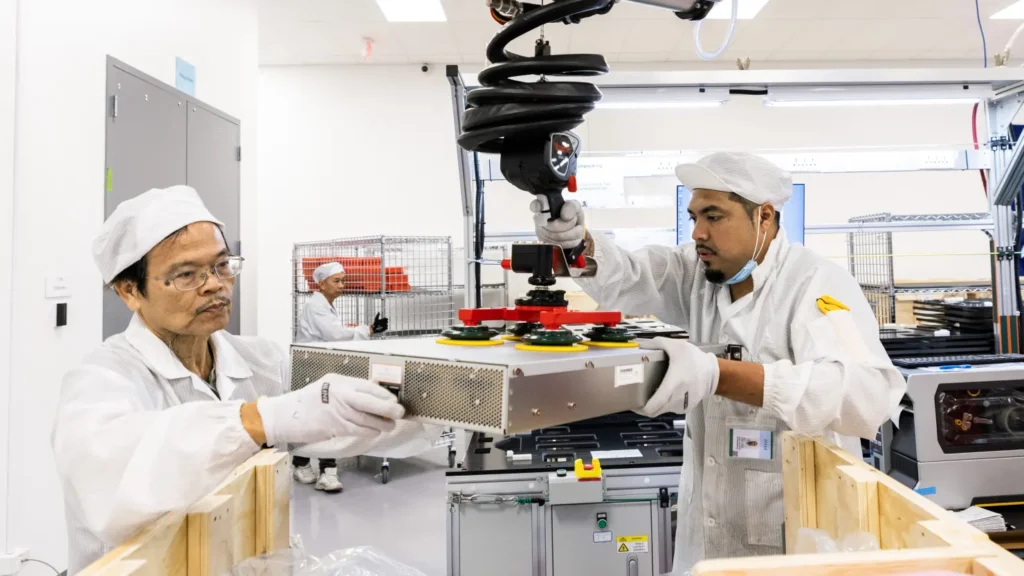
Apple has officially started shipping AI servers built at a facility in Houston, Texas, marking a major milestone in its domestic manufacturing push. This step is part of what appears to be a broader strategic shift — one that touches supply‑chains, national policy, corporate strategy, and the evolution of AI infrastructure.
Here’s a deeper look at what’s going on, why it matters, and what the bigger implications are.
By manufacturing AI servers domestically, Apple reduces reliance on overseas factories or geopolitical risk points. Given tensions around trade, tariffs and critical‑component sourcing, on‑shoring key hardware helps Apple mitigate risk.
Often, discussion of AI centres on models, data and algorithms. But the physical infrastructure — servers, datacentres, chips — is just as important. Apple’s investment shows hardware is back in strategic focus.
Apple is signalling it intends to own more of the stack: hardware + software + services + cloud/AI infrastructure. That’s a higher bar. Competitors will likely respond. The move may make Apple more self‑reliant and less dependent on third‑party hardware.
Apple often emphasises privacy and security. By controlling more of the hardware (servers) domestically, it may claim greater control over user data, AI‑processing, and secure cloud services — features that could differentiate its offerings.
1. Why is Apple building AI servers in Texas instead of outsourcing overseas?
Because building domestically reduces geopolitical risk, gives greater control over hardware/quality, aligns with U.S. policy incentives for domestic manufacturing, and potentially improves supply‑chain resilience.
2. What will these servers be used for?
They’ll power Apple’s AI features, including those under the “Apple Intelligence” umbrella — processing large models, serving device‑based AI features, enabling cloud/edge AI workflows, and supporting internal data‑centre operations.
3. Will this lead to iPhones being made in the U.S.?
Not necessarily in the immediate term. The server manufacture facility is distinct from iPhone assembly. Apple has not announced full U.S. iPhone production; assembly remains largely overseas. The server move is part of hardware/infrastructure production rather than consumer‑device assembly.
4. How many jobs will this create?
Apple’s public statements suggest “thousands” of jobs and earlier announcements mentioned ~20,000 additional U.S. jobs (across R&D, engineering, manufacturing) linked to the broader U.S. investment initiative. But exact numbers for the Texas facility alone are not yet clearly detailed.
5. What are the risks of this project?
Risks include cost overruns, supply‑chain bottlenecks (components, chips), insufficient demand for the hardware, competition pushing prices down, and the facility becoming under‑utilised if AI growth slows. There’s also risk around energy, environmental impact, and workforce availability.
6. Does this mean cheaper Apple products for consumers?
Not directly nor immediately. While domestic manufacturing may give Apple more control, it doesn’t guarantee lower consumer prices — many other factors (global components, R&D cost, marketing) influence end‑pricing. However, it may enhance performance, reliability, or privacy features.
7. How does this fit into U.S. policy or industrial strategy?
It aligns strongly: the U.S. has been pushing high‑tech manufacturing back domestically, providing incentives for chip/data‑centre production, and encouraging supply‑chain resilience. Apple’s move is one of several large bets supporting that agenda.
8. Will this change Apple’s competitive position?
Potentially yes. By owning more of its infrastructure and manufacturing, Apple may achieve tighter hardware‑software integration, faster innovation, and better cost/control over its AI platforms — advantages that could differentiate it from competitors.
9. When will the facility reach full scale?
The manufacturing facility has already begun shipping servers, but full build‑out, ramping to full capacity, and maximizing production will take time. Public announcements suggest the full facility build‑out is aimed at 2026 and beyond.
10. How does this impact environmental and sustainability goals?
Server manufacturing and data‑centres are energy‑intensive. How Apple manages power sourcing, cooling, waste, and carbon footprint at this facility will matter for its overall sustainability profile. The move offers opportunity (domestic control) but also environmental responsibility.
Apple’s decision to ship American‑made AI servers from Texas signals more than a manufacturing milestone — it points to a broader shift in how tech companies think about hardware, infrastructure and domestic investments. For Apple, it is a strategic bet on control, performance and resilience. For the U.S., it is part of the high‑stakes race to reclaim advanced manufacturing and AI leadership.
But the execution will matter—job creation, cost efficiency, supply‑chain stability, demand for the hardware and the environmental impact will all determine whether this move pays off. In the end, this facility isn’t just about making servers—it’s about building the infrastructure of tomorrow’s tech ecosystem.

Sources CNBC


